One Bold Wall, Two Problems: Rethinking Accent Paint for Dubai Villas
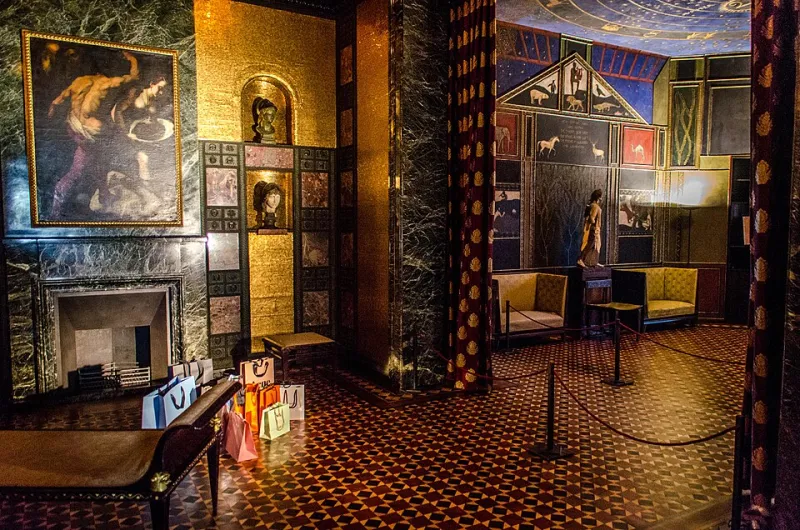
Photo: Ralf Steinberger from Milan, Berlin + Munich, Italy + Germany, CC BY 2.0, via Wikimedia Commons
If you have spent any time watching American renovation television, you know the formula: neutral room, one dramatic wall, maybe a navy dining room or a deep green behind the sofa. It photographs beautifully. It feels decisive. And it is one of the first things homeowners from the US want to recreate when they move into a Dubai villa.
The trouble is that a lot of those accent walls look fantastic on camera and slightly off in person. Not because the color was wrong, but because the room around it was never really set up for a single dark, saturated plane. Dubai's housing stock, sunlight, and design habits all pull in a different direction.
The American Accent Wall Was Built for a Different Room
In a typical US home, you often have defined rooms: a dining room with four walls and a doorway, a bedroom with one obvious headboard wall, a living room that ends where the hallway begins. An accent wall works there because the architecture gives it boundaries. The eye knows where the statement starts and stops.
Dubai villas tend to be more open. Living and dining areas flow together, kitchen islands sit in the same visual field as the sofa, and double-height entryways open straight into the main living space. When you paint one wall dark in a room like that, it does not read as a deliberate focal point. It reads like a wall that forgot to finish getting dressed.
The same issue shows up in rentals and apartments with long, unbroken walls. A saturated stripe of color on one section can make the rest of the room feel unfinished rather than balanced.
Dubai Sunlight Is Not a Neutral Observer
Here is the part that surprises people: the light itself changes the color. Dubai gets intense, direct sun for most of the year, and it bounces off pale floors, light ceilings, and neighboring buildings. A deep charcoal that looked moody and sophisticated in a paint store can turn into a flat, dusty gray by 2 p.m.
Then the afternoon arrives, the sun drops, and the same wall goes almost black. In the evening, under warm artificial light, it may read brown or purple. That is a lot of personality shifts for one wall to manage.
In the US, you might get away with a dark accent because the room has softer, more indirect light. In Dubai, the contrast between a bright, sunlit room and a single dark wall is harsher. The result can feel like a shadow that never moves.
Open Plans Shrink When One Wall Goes Dark
Color does not just decorate a room; it changes how big the room feels. Pale walls recede. Dark walls come forward. In an open-plan villa, a dark accent wall can visually pull one side of the room closer, making the whole space feel narrower than it is.
That is not a theoretical concern in Dubai, where villas often trade width for length and where the living area may already be doing double duty as a home office, playroom, and entertaining space. A bold wall can make an already busy room feel tighter.
This is also why accent walls can hurt resale more than homeowners expect. Dubai buyers tend to lean toward calm, bright, neutral interiors. A dramatic feature wall is a personal choice, and the next tenant or buyer may see it as a repaint they have to budget for. If you are renting, your building may also have rules about dramatic exterior-facing changes, though interior color is usually more flexible.
Where the Accent Wall Still Works
None of this means bold color is banned. It means the single-wall approach needs better conditions.
An accent wall can work when the room has a clear architectural boundary, like a dedicated dining nook or a bedroom wall framed by doorways. It can work in a smaller room with less direct sun, such as a study or a media room. It can also work if you keep the color a few shades deeper than the surrounding walls rather than jumping to near-black.
A practical rule: if you cannot describe where the accent wall begins and ends without pointing, it may not be the right wall. And if the room already has strong features, like a large window, a statement light fixture, or a busy floor, adding a loud wall gives the eye too many places to land.
Better Alternatives for Dubai Interiors
If you want depth without the single-wall gamble, consider these approaches instead.
Tone-on-tone layering
Paint the walls one soft neutral and use a slightly deeper shade of the same color on trim, doors, or the ceiling. This creates dimension without a hard visual stop. In Dubai's bright rooms, a subtle contrast often reads as more intentional than a dramatic one.
Textured finishes
Limewash, microcement, and subtle plaster effects are having a moment because they add movement without relying on a strong color. They catch the changing desert light and look less flat than standard paint. They also hide minor wall imperfections, which is a real bonus in villas that see their share of settling cracks.
Alcove and niche accents
Instead of painting an entire wall, paint the inside of a recessed shelf, a niche, or a small entryway alcove. This gives you a hit of color in a contained space. It feels deliberate rather than accidental, and it is easy to undo.
Ceiling and trim color
A soft color on the ceiling or a deeper tone on the baseboards can add interest without closing in the room. This works especially well in bedrooms and studies where you want atmosphere but not a cave.
Repeat, don't isolate
If you love a bold color, use it in two or three small places around the room: a painted door, a window frame, a single piece of furniture, a shelf backing. Repetition makes the color feel like part of the design rather than an isolated experiment.
A Practical Checklist Before You Commit
Before you buy a gallon of deep teal, do a few things that will save you from an expensive do-over.
- Paint large sample boards, not tiny swatches, and move them around the room at different times of day.
- Look at the color next to your floor, your sofa, and your curtains, not just on a white wall.
- Check how the color reads in artificial light in the evening.
- Ask your painting contractor how many coats a deep color will need. Saturated colors often require more coverage, and that affects the estimate.
- If you are renting, confirm what your lease says about repainting before you move out.
An accent wall is not a bad idea. It is just a very specific idea that needs the right room, the right light, and the right amount of restraint. In Dubai, the rooms that work best with bold color tend to be the ones that already have clear boundaries and a break from the sun. Everywhere else, a quieter approach usually looks more expensive, more current, and a lot easier to live with.